14 May 2026
Members of the 3rd Health Battalion (3 HB), including personnel from South Australia, Victoria and Tasmania, participated in Exercise Shrike Walk to test and strengthen their military and healthcare capabilities.
Personnel spent several days in the field on the recent exercise, developing a range of dismounted all-corps skills, primarily focused on defensive operations, including day and night patrols, weapons handling, key leadership engagement, radio communications and section attacks, as well as living out of stage two defensive positions.
While these skills are not typically part of a healthcare worker’s day-to-day role, nursing officer Captain Sophie Hellemans said they were essential for building physical and mental resilience and developing combat behaviours to improve survivability in a deployed environment.
She said the training also provided valuable context by helping healthcare personnel better understand the conditions faced by many of their patients, as well as the broader military system that supports them.
“It’s our job to keep soldiers in the fight, so it’s important to understand what soldiers actually do and what we’re sending them back to,” Captain Hellemans said.
“How can we appropriately support the commander and treat the soldier as an individual without understanding that context?”
Personnel established forward treatment teams, a brigade support platoon, a casualty regulation cell and the Role 2 Basic (R2B).
One of the Australian Defence Force’s most rapidly deployable treatment facilities, the R2B is equipped with intensive care capability, resuscitation beds, an operating theatre and a low-dependency unit, enabling medics to test their ability to work together as a team.
They managed a variety of simulated scenarios ranging from malaria and eye infections to IED (improvised explosive device) shrapnel injuries and gunshot wounds, culminating in a mass casualty event.
'We managed a ‘no duff’ dental emergency involving a vertical tooth fracture. This required a partial tooth extraction, restoration and follow-up treatment in the field environment.'
For many participants, including reservist nursing officer Lieutenant Mark Mudge, it was their first time training in an R2B facility. He said it helped him become more familiar with the types of scenarios he might encounter on operations, as well as the limited drugs and treatment options available in a deployed environment.
“You have to be environmentally aware and proficient,” Lieutenant Mudge said.
“If you don’t know what treatments you have available to you and you’re wasting time looking for them, then patient care will be compromised,” Lieutenant Mudge said.
Captain Hellemans said she enjoyed working in an integrated workforce, noting that both SERCAT 5 (reservists) and 7 (full-time) nurses brought valuable skills and perspectives to the team.
“SERCAT 5 nurses are a great clinical resource. They bring perspectives into the clinical space that a full-time Army nurse may not consider due to their increased exposure to working in civilian hospital environments, however, we [SERCAT 7 nurses] often have more experience working with tactical considerations and resource constraints,” Captain Hellemans said.
She said another valuable learning opportunity was the need to build rapport and trust rapidly within new teams.
In an attached tent, the dental team not only completed simulated scenarios but provided personnel with routine dental care, including radiographs and cleans.
Dental officer Captain Bernard Harrison said the team demonstrated their capability when an exercise participant fractured their tooth.
“We managed a ‘no duff’ dental emergency involving a vertical tooth fracture. This required a partial tooth extraction, restoration and follow-up treatment in the field environment,” Captain Harrison said.
In the nearby brigade support platoon, psychology, physiotherapy, environmental health and an additional treatment team established their own tents to practise delivering their services in a military context, with a focus on supporting soldiers to keep fighting.
Environmental health personnel conducted water testing and discussed how they would manage a potential gastroenteritis outbreak, while psychologists managed acute mental health role-player patients, and rehearsed briefs and procedures for supporting soldiers returning from overseas deployments.
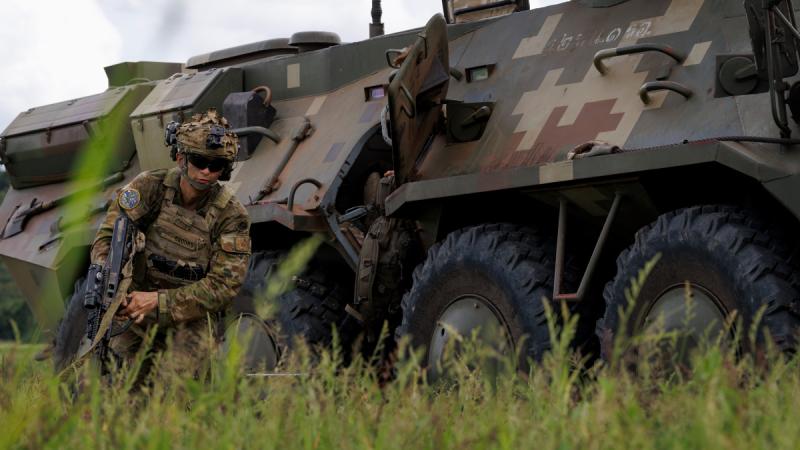
Exercise Shrike Walk concluded with two days on the firing range, where participants honed their weapon skills by engaging static and moving targets by day and night. They also qualified in night-fighting equipment and conducted live-fire mounted machine gun practice from their light protected mobility vehicles.
Commanding Officer Lieutenant Colonel Shaun Fitzell said it was important to use every training activity as a rehearsal for war, ensuring the battalion prepared to deploy rapidly with limited support and deliver effective healthcare.
“Exercise Shrike Walk has been an excellent opportunity because it has allowed us to mass, stress, and test 3 HB’s health capabilities, from the point of injury through to damage control surgery, rehearsing our operational health role,” Lieutenant-Colonel Fitzell said.
“We have also concentrated on developing combat skills and behaviours and testing resolve and resilience, thereby improving the survivability of our medical teams.”