5 November 2026
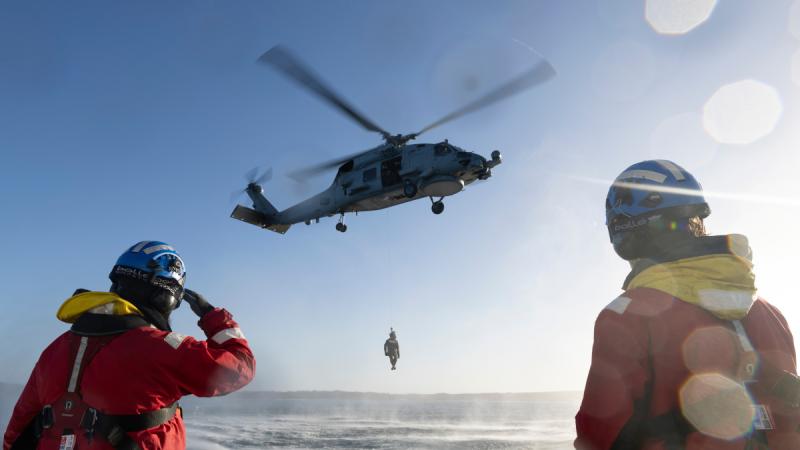
An earthquake, a tsunami and a volcanic eruption were simulated to test regional disaster response during Exercise Trident Resolve.
It was the first time in ASEAN Defence Ministers’ Meeting Plus (ADMM-Plus) history that three Experts’ Working Groups trained together under a single integrated operational scenario.
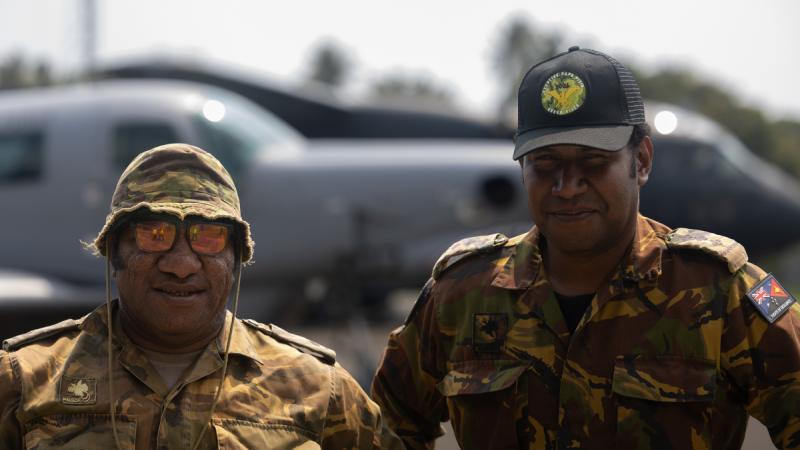
Bringing together 19 nations and about 2200 military, civilian and emergency personnel, the combined field exercise tested how the Indo-Pacific region responds to catastrophic, multi-hazard natural disasters in Banten, Indonesia.
Within the exercise scenario, a magnitude 8.7 earthquake strikes the Sunda Megathrust zone off the southern coast of Java in the early hours of the morning. The seismic event triggers a major simulated eruption of Mount Anak Krakatau, sending an ash plume across Banten Province while generating destructive tsunami waves along the Sunda Strait.
Essential infrastructure, power grids, transport corridors and communications networks are severed across the province, overwhelming local emergency services and prompting the Government of Indonesia to activate its national disaster response mechanism and accept targeted international assistance.
Welcoming the participating nations during the opening ceremony in Banten, Indonesia, the Inspector General of the Indonesian Ministry of Defence Lieutenant General Rui F.G.P. Duarte explained why modern disaster response required multinational cooperation.
“A large-scale disaster does not recognise national borders. It impacts communities, healthcare systems, communication networks and essential infrastructure,” Lieutenant General Duarte said.
“Effective disaster response therefore requires collective action, shared knowledge and coordinated capabilities.”
Supported offshore by the Indonesian hospital ship KRI Dr Soeharso and the Singaporean landing platform dock RSS Endeavour, multinational teams were spread across operational sites throughout Banten Province, applying their expertise to a shared disaster response effort.
For the first time, three ADMM-Plus Experts’ Working Groups on humanitarian assistance and disaster relief (HADR), military medicine and cyber security, were integrated into a single combined activity.
'Effective disaster response therefore requires collective action, shared knowledge and coordinated capabilities.'
United States co-chair Major General E. Darrin Cox said bringing together 19 nations and three disciplines was the result of years of planning and cooperation.
“Bringing 19 nations and three distinct working groups into a combined exercise does not happen easily or overnight,” Major General Cox said.
“Over the past year, from initial discussions to the final planning conference, we aligned objectives, clarified roles and responsibilities, and coordinated how we will operate together. Now we put those plans into action.”
The scale of the simulated disaster was designed to stress-test the system, the participants and their responses. Each operational site presented a distinct challenge, from hazardous chemical leaks and contaminated water supplies to damaged medical facilities and more than 100,000 simulated displaced persons.
A major evolution in this year’s exercise was the direct integration of cyber security operators into the field to support disaster relief. Mobile cyber assessment teams deployed daily from Mandalika Field, Banten Province, to operational sites, working directly alongside medical personnel and field engineers.
Rather than focusing on IT systems alone, the teams evaluated operational information resilience by assessing critical communication dependencies, identifying where information could be manipulated or falsely attributed, and verifying what alternatives exist if networks fail.
Air Commodore Michael Reidy, who has co-chaired the Experts’ Working Group on cyber security with Cambodia for the past two years, said the exercise demonstrated how cyber security now underpins all aspects of disaster response.
“Combining cyber security with HADR and military medicine is a story about the emergence of cyber security as a real problem in events like this,” Air Commodore Reidy said.
“It cannot just be left to the cyber security professionals. It is important that the medical people, the HADR people, and indeed the whole community, understand that cyber security is a risk in everything we do.”
Beyond the exercise scenario, Indonesia also delivered a project-based community health activity under the theme ‘Strengthen Community Resilience through Health Awareness’, providing health care and health education to local residents.
'Exercises like this ensure that when crisis strikes, we do not have to figure out how to work together. We already know, because we have already done it.'
At Karang Baros, the exercise produced a tangible outcome for the local community.
HADR engineers from Australia, Indonesia, New Zealand and the United States were tasked with supporting the renovation and re-establishment of a local village medical facility.
Heavy rainfall had entered through the roof, leaving mould, flooding and cracked walls throughout the building. The combined team completed electrical works, plumbing and interior renovations, restoring access to health care for a community located an hour from the nearest hospital.
For Major General Cox, outcomes like this represent the return on years of planning and cooperation.
“Exercises like this ensure that when crisis strikes, we do not have to figure out how to work together. We already know, because we have already done it,” he said.
While senior leaders spoke of interoperability and preparedness, those on the ground measured success differently.
Corporal Jack Miles, an Australian Army engineer supporting the HADR task, measured it in the people who came to watch.
“My highlights have been the community engagement with the school kids, just watching them laugh, and problem-solving with the multinational contingent and coming to a solution together,” Corporal Miles said.
As Exercise Trident Resolve concluded, participating nations departed with stronger partnerships, shared lessons and greater interoperability, ensuring the region is better prepared when the next real disaster strikes.