12 May 2026
It was a cold and wet day when Swissair Flight 330 went down in the Würenlingen forest near Zürich Airport in Switzerland.
Co-pilot Armand Etienne made his final transmission at 1.34pm on February 21, 1970.
“330 is going down. Goodbye everyone.”
It was the final twist in the extraordinary life of an extraordinary aviator and Distinguished Flying Cross recipient from World War II.
In 2023, as escort officer manager for Air Force Events, Group Captain David Fredericks, noticed the officers he trained were increasingly diverse in nationality and ethnicity.
He began to research the Air Force’s multicultural history to uncover whether it was a recent phenomenon.
Going back to Air Force’s beginnings, he found people who weren't born in Commonwealth countries flying for the Royal Australian Air Force.
“One name that popped up was Armand Etienne – a French-sounding name – but he was born in Odessa, then part of Russia,” Group Captain Fredericks said.
After opening Armand’s personnel file at the National Archives of Australia, Group Captain Fredericks was immediately drawn into his story.
'I was in awe to see an artefact that belongs to someone with such an amazing story.'
Born September 15, 1918, and raised in Switzerland, Armand studied agriculture before moving to Australia in 1940 as an agronomist at Quobba Station in north-west Western Australia.
By September 1941 he had moved to Perth and just two months later – on the day Japan entered the war – Armand enlisted as an airman aircrew trainee.
Armand was no stranger to military life, having completed Swiss national service before moving to Australia, and seemed to find his niche in the RAAF.
After completing his pilots’ courses, Armand was posted to 43 Squadron in July 1943 and, by October 1944, had flown 790 hours operationally across 46 sorties.
One flight stood out in particular for Group Captain Fredericks.
When a Catalina aircraft was shot down in enemy territory, Armand was dispatched in his own Catalina to attempt a rescue.
He flew 895 miles into enemy territory in daylight, landing at sea only 33 miles from an active enemy ship.
He rescued the crew of the downed Catalina and returned, flying nearly 17 hours and 1800 miles.
It was the longest Catalina flight by any country during the war, and he earned the Distinguished Flying Cross for the daring rescue.
After the war, Armand continued to fly Catalinas before demobilising in February 1947.
He flew for the Dutch East Indies Squadron in Java and the Dutch KLM airline, before eventually returning to Switzerland with his wife and young daughter in 1948.
'In some ways I feel like my mission now is to tell his story, otherwise it’ll be lost forever.'
There, he discovered he had been tried and found guilty in absentia of fighting for a foreign military, which was illegal for Swiss males. Upon appeal, his prison sentence was suspended.
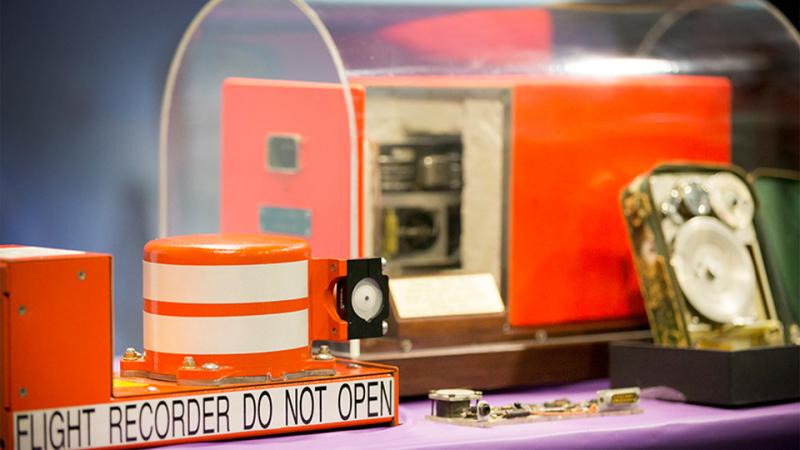
He joined Swissair in early 1949 and flew all aircraft used by the airline until an altitude-sensitive bomb detonated in the cargo hold of Flight 330, killing all on board.
To this day it remains the worst terrorist attack in Swiss history.
Group Captain Fredericks aims to tell the story of Armand and other non-Australian RAAF pilots in an upcoming book.
While researching for the book, Group Captain Fredericks contacted a relative of Armand’s living in Switzerland, who mentioned she had been given a medal but was unaware of the story behind it.
It was the Distinguished Flying Cross awarded for the daring rescue in 1944, which she subsequently gave to Group Captain Fredericks as a donation to RAAF.
In time, it will be displayed at the Townsville Aviation Heritage Centre.
“I was in awe to see an artefact that belongs to someone with such an amazing story,” Group Captain Fredericks said.
“In some ways I feel like my mission now is to tell his story, otherwise it’ll be lost forever.”