8 May 2026
Fighting and winning in the cyber domain is critical in today’s military conflicts, and defending the cyber battlespace was a key component of Exercise Balikatan.
With rapid developments in cyber warfare, the defensive drills held during the exercise were an important test for participating nations in working together to repel an enemy in cyberspace.
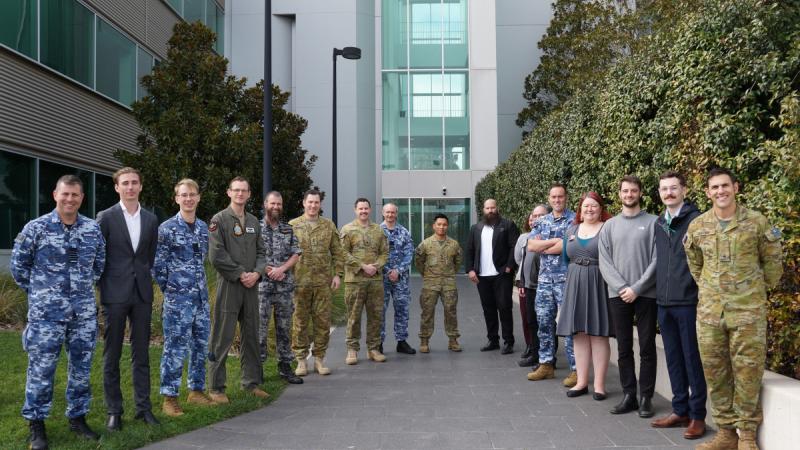
ADF members from Cyber Command – with counterparts from the Philippines, the United States, Canada, Japan, New Zealand and France – advanced how they tracked and exposed threats, responded to malicious attacks and blocked enemy counter-attacks.
Cyber operator Signaller Callum Prestedge said the scenarios the teams faced were designed to reflect real-world operations, and the frequency and rapidity of the attacks pushed the teams’ skills to the limit.
“Every environment, whether real or virtual, will have its challenges and difficulties, and this was a good level of difficulty for the exercise,” Signaller Prestedge said.
“It tested how we worked together and responded to what was happening in the network.”
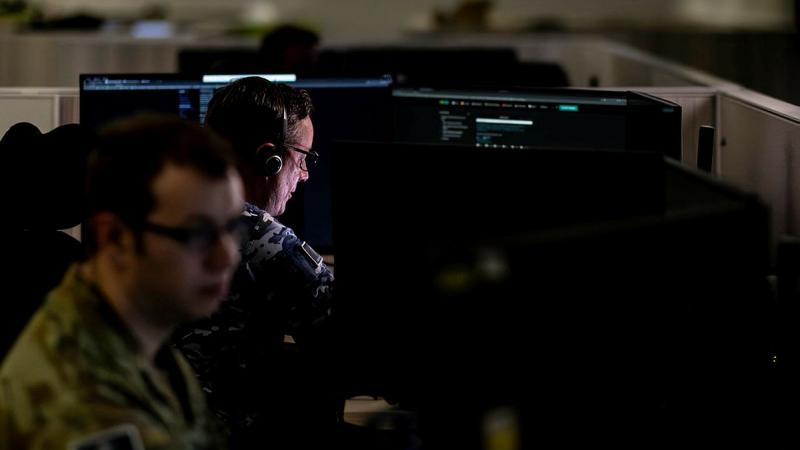
The exercise was hosted on a US-built cyber range using virtual machines to monitor and respond to threats.
'We saw from the lessons in Ukraine and in Iran that one of the first forms of warfare that was done was the cyber warfare.'
Despite the virtual nature, Signaller Prestedge said the lessons learned from working with partner nations to defend systems were vital.
“The main challenges were with language and procedures, but we all worked together and learnt from each other,” he said.
“We’re working across different networks and defending them as a team.
“We find how they got in, then put measures in place to clear and stop them getting back in.”
The importance of nations working together to defend the cyber battlespace was emphasised by Chief of Staff of the Armed Forces of the Philippines General Romeo Brawner Jr.
“We saw from the lessons in Ukraine and in Iran that one of the first forms of warfare that was done was the cyber warfare to disable radar sites, disable command centres, disable firing batteries, etc.,” General Brawner Jr said.
“That is why it is very important that we develop this capability of defending our resources, our networks.”
Working with other nations also gave Signaller Prestedge an important insight into how other operators work.
“It’s been a great opportunity to learn from partner nations and share how we do things,” he said.
“We’ve also seen the other nations’ procedures here, which we can take back and improve how we work.”