8 May 2026
31 Squadron has lost its last known WWII serviceman from the 1600 who served.
Ron Leckie was a Beaufighter navigator who patrolled Australia’s northern coastlines and beyond.
He first joined the Army in 1941 and was posted to the 111th Anti‑Tank Corps, before being rushed to Bondi Beach for months of surveillance following Japanese submarine attacks on Sydney. He transferred to the Royal Australian Air Force the following year.
On December 27, 1944, Ron’s Beaufighter crew destroyed a bridge and several buildings on the island of Sulawesi, Indonesia, dropping four 500‑pound bombs, firing a dozen 60‑pound rockets and expending 1440 rounds from their 20mm cannon against Japanese targets.
By the time Japan surrendered to the Allies on August 15, 1945, Ron had spent 653 hours in the air during the war.
Following the war, Ron served as part of the occupation force in Japan and visited Hiroshima, where the United States had detonated one of two nuclear weapons on the Japanese mainland.
Ron turned 104 on Anzac Day, the first year he was unable to attend the march. He died on April 30.
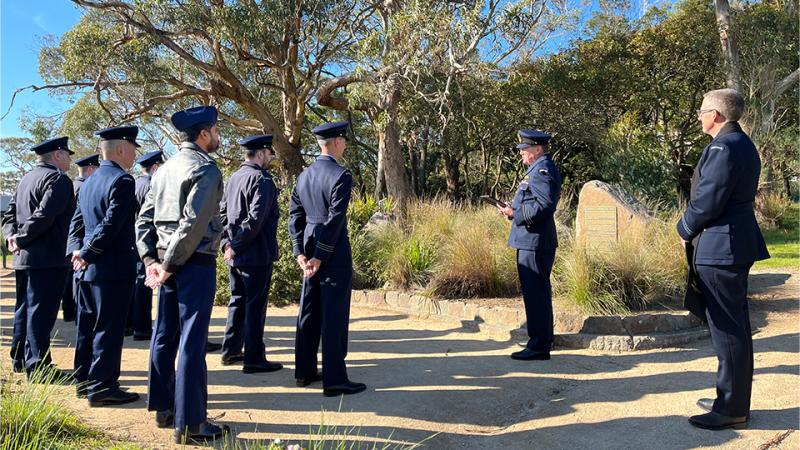
Commanding Officer 31 Squadron, Squadron Leader Lisa Casey, said his legacy and service will long be remembered.
“Ron's passing marks the close of a profoundly important chapter in the history of 31 Squadron and more broadly, the loss of a living connection to those who served during the Second World War,” she said.
The Bristol Type 156 Beaufighter was a British twin‑engine heavy fighter and strike aircraft used extensively during the Second World War for long‑range patrols, ground attack and maritime strike missions.
By the end of WWII, 31 Squadron had flown 2660 offensive sorties, claiming 20 enemy aircraft destroyed or damaged in the air, as well as 54 aircraft destroyed and 32 damaged on the ground. Nine ships were destroyed with a further four damaged.
Military service extended further back for the Leckie family.
During WWI, Ron’s father, Harry Leckie, served with 1 Squadron, Australian Flying Corps, in Egypt and Palestine.
Trained as a photographer, Harry contributed to the unit’s aerial reconnaissance effort, producing photographic intelligence used to observe and record enemy positions.
Following WWI, he convened a meeting of former squadron members in Melbourne, an initiative that led to the establishment of what would become the RAAF Association of Australia.