9 April 2026
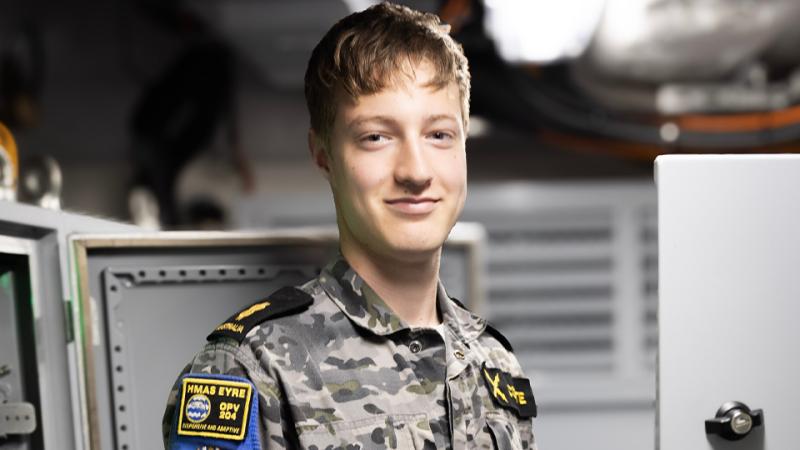
Growing up on the coast of Western Australia, Craftsman Jack Patman spent countless hours at his father’s side, helping pull apart old cars, service the family boat and fix anything with moving parts.
Those early lessons would eventually shape a vocation he didn’t yet know existed: becoming one of the Army’s first marine technicians trained from scratch.
Craftsman Patman’s parents crossed the continent to attend his graduation on February 18 at HMAS Cerberus.
The icing on the cake was seeing him awarded Student of Merit for the Army’s inaugural Marine Technician Propulsion Course.
“It’s quite an honour – the people we work with, they're quite strong technicians, they really know their stuff,” Craftsman Patman said.
“The way that the future is looking for the trade, it's quite exciting. It’s a really good space to be working in and I'm looking forward to all the future developments in the career and working with the new landing craft.”
Craftsman Patman initially joined as a vehicle mechanic, but when the opportunity arose to join the first Army marine technician intake, he leapt at the chance.
“I grew up around the ocean and with Dad being an engineer, he was never afraid to pull old cars and the boat apart – and I would be right there to help,” he said.
“So when the chance came to switch, I was pretty happy. It feels like the right place to be.”
'It’s quite an honour – the people we work with, they're quite strong technicians, they really know their stuff.'
The 18-month course included studies with Chisholm TAFE, practical mechanical work, then Navy-specific training through the Marine Systems Foundation course.
Students learned everything from propulsion systems to power generation, sewage treatment, fuel and water transfer – skills they will use daily aboard Army’s new landing craft.
Introduction of the marine technician trade is a response to the Army’s role in an expanding littoral capability.
The Army School of Electrical and Mechanical Engineering has been accelerating development of a new workforce to maintain the fleet of medium and heavy landing craft, now under construction in Perth.
The school’s Commanding Officer Lieutenant Colonel Hans Hamilton said Army had moved decisively to meet the National Defence Strategy.
“The capability doesn’t exist without the humans,” Lieutenant Colonel Hamilton said.
“We’ve had to innovate and keep pace with the delivery of the physical capability by developing a training pathway in lockstep with Navy.”
This includes new joint training at HMAS Cerberus, where Army students train with Navy marine technicians, learn common systems and build early familiarity with the environments they will one day serve in.
Army’s first cohort of marine technician graduates have moved to Fleet Base East for platform-specific training, to be followed by employment aboard HMAS Adelaide, an amphibious landing helicopter dock.