12 March 2026
Aircraft fly fast, but information moves faster, as airborne electronic analysts turn signals into decisions.
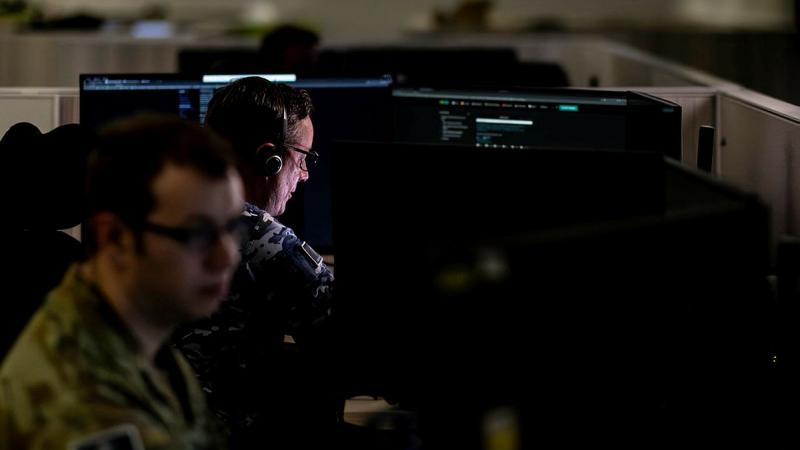
Intelligence, surveillance and reconnaissance (ISR) aircraft collect vast amounts of data during every sortie. Airborne electronics analysts (AEAs) interpret this data in real time using advanced airborne electronic systems. Their analysis helps the aircraft conduct above-and-below surface warfare, detect threats and support search and rescue operations.
As operations become increasingly data-driven, the ability to understand and quickly act on this information is a vital capability.
AEAs operate across Air Force’s E-7A Wedgetail, MC-55A Peregrine, P-8A Poseidon and MQ-4C Triton aircraft, where their work underpins the effectiveness of each platform.
During missions, AEAs analyse live sensor feeds and share information with the mission commanders and pilots. As part of a crew, they build a broader force picture and shared understanding of the operational environment.
For Corporal Joel Letham, the AEAs’ impact on missions is clear.
“The role is arguably one of the most critical for operations and is consistently at the forefront of deployments and missions. It is incredible working on the cutting edge of operations worldwide,” Corporal Letham said.
“I’ve been to places and participated in missions I never imagined.”
'As modern operations evolve, the demand for information and understanding continues to increase. Awareness is an advantage and AEAs help deliver it every mission.'
The operational tempo of the specialisation is high. The role requires extensive training in electronic surveillance, analysis and mission systems, and prepares aviators to operate complex sensor suites in dynamic environments.
“It’s demanding and constantly evolving, which makes every day interesting and worthwhile,” Corporal Letham said.
The high-tempo results in many AEAs applying their skills soon after completing initial employment training.
After graduating from the Air Force Gap Year Program, Corporal Keean Ferguson quickly found himself contributing to real-world operations.
“I had only been in the mustering for four months when I deployed overseas,” Corporal Ferguson said.
“My experience exceeded expectations and showed me how demanding but rewarding the role is.”
After 15 years in the Army, Corporal Andrew Newton transferred to the Air Force to become an AEA. He believes that the variety of work, strong team culture and constant learning environment are building blocks for a positive workplace and a rewarding career.
“The mission set AEAs support, the diversity of tasks and the opportunity for overseas travel are major attractions,” Corporal Newton said.
As modern operations evolve, the demand for information and understanding continues to increase. Awareness is an advantage and AEAs help deliver it every mission.